


For a great margarita, start with an additive-free blanco made from 100% Blue Agave. Experts consistently point to LALO Blanco (around $40/750ml), Espolon Blanco (around $25), Cimarron Blanco, Siete Leguas, and El Tesoro as the top picks for mixing. Each delivers the clean citrus and spice notes that make a margarita sing without fighting the lime or orange liqueur.
If you want to experience these spirits in a proper setting, a handful of US venues stand out. In New York City, Vida Verde, Don Tequila Urban Cantina, and Mayamezcal each bring a distinct take on the classic cocktail. In Washington DC, Tequila & Mezcal rounds out the list with a welcoming, agave-focused bar program.
- Vida Verde (NYC): Classic margaritas, authentic Mexican cuisine, private events. $$
- Don Tequila Urban Cantina (NYC): Frozen margaritas, happy hour specials, full Mexican menu. $$
- Mayamezcal (NYC): Signature margaritas, rare mezcal flights, voted top mezcal bar by Food & Wine. $$$
- Tequila & Mezcal (DC): Agave cocktails, catering services, walk-ins welcome. $$
| Tequila | Type | Best For | Price Point | Additive-Free | Flavor Notes |
|---|---|---|---|---|---|
| LALO Blanco | Blanco | Classic crisp margaritas | ~$40 | Yes | Citrus, cinnamon, floral |
| Espolon Blanco | Blanco | Everyday and pitcher margaritas | ~$25 | Yes | Balanced, fruity, smooth |
| Cimarron Blanco | Blanco | Big batch margaritas | ~$25 | Yes | Agave-forward, bright |
| Siete Leguas Blanco | Blanco | Sipping and mixing | Mid-range | Yes | Sweet, subtle bite |
| El Tesoro Blanco | Blanco | Premium classic margaritas | ~$42–$55 | Yes | Smooth, earthy, pepper |
Editor's Pick — Gold Medal Winner
Whiteout Blanco Tequila
100% Blue Weber Agave · Additive-Free · Gold Medal, Agavos · Silver Medal, SFWSC
Shop Whiteout Blanco →Looking to elevate the experience? Pair with the Celebration Duo or VIP Bar Pack.
How do the top tequila brands compare for margaritas?
The five bottles above cover every budget and style, but they are not interchangeable.
LALO Blanco is the expert consensus pick for a reason. It contains only agave, yeast, and water, which means nothing competes with the lime and Cointreau in your glass. Its citrus and light spice notes complement the margarita’s core ingredients rather than muddying them. At around $40, it sits in a sweet spot between budget and premium.
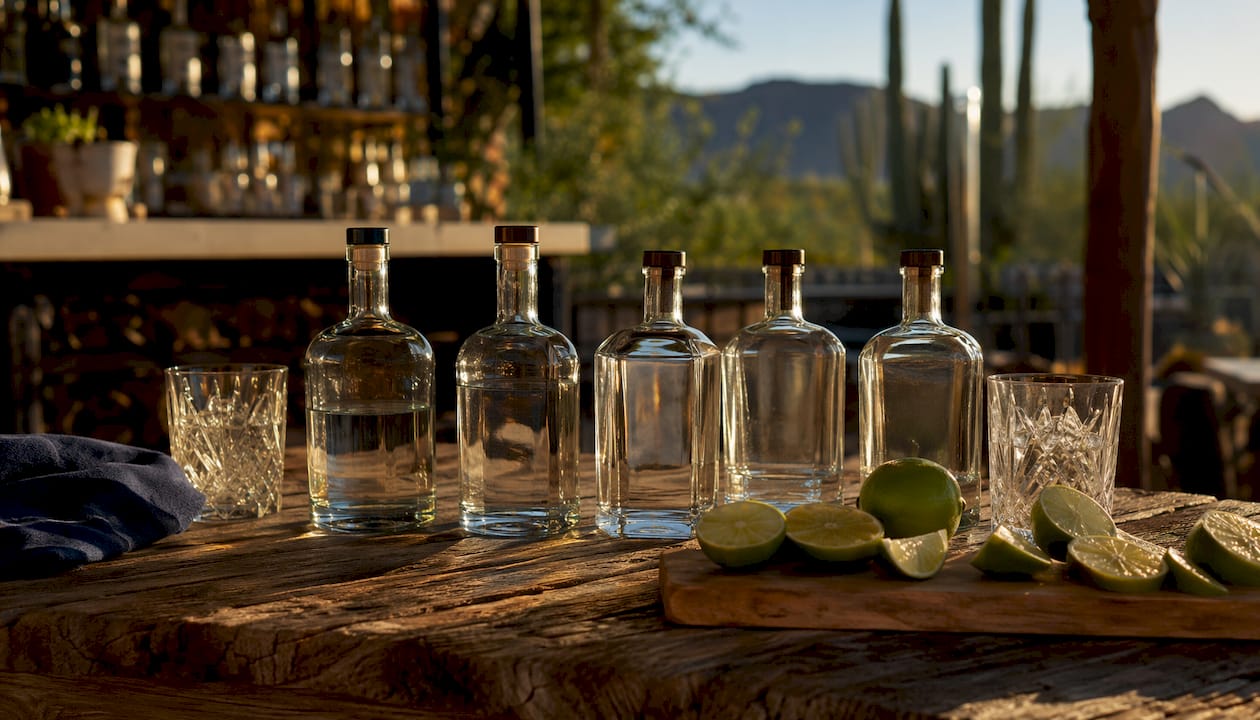
Espolon Blanco is the crowd-pleaser. Balanced, fruity, and widely available at roughly $25, it works equally well for a single cocktail or a pitcher margarita recipe for a group. If you are hosting and need a bottle that satisfies everyone, this is the safe call.
Cimarron Blanco punches well above its price. Bartenders reach for it specifically for big batch margaritas because the flavor holds up at volume and the cost does not punish you for making a full pitcher. Bright and agave-forward, it keeps the cocktail clean.
Siete Leguas Blanco carries a natural sweetness that softens the sharp edge many blancos have. Sometimes called the “original Patron,” it is easier to find than cult favorites like Fortaleza and works just as well neat as it does shaken.
El Tesoro Blanco is the premium pick for a classic margarita. Traditional production methods give it an earthy, peppery depth that holds its own against bold lime. At around $42–$55, it is a splurge for mixing, but the result is noticeably cleaner and more complex.
Editor's Pick — Gold Medal Winner
Whiteout Blanco Tequila
100% Blue Weber Agave · Additive-Free · Gold Medal, Agavos · Silver Medal, SFWSC
Shop Whiteout Blanco →Looking to elevate the experience? Pair with the Celebration Duo or VIP Bar Pack.
Which US bars specialize in margaritas worth visiting?
| Venue | Location | Best For | Price | Rating |
|---|---|---|---|---|
| Vida Verde | New York City | Classic margaritas and Mexican food pairings | $$ | 4.6★ |
| Don Tequila Urban Cantina | New York City | Frozen margaritas and happy hour | $$ | 4.3★ |
| Mayamezcal | New York City | Signature margaritas and mezcal flights | $$$ | 4.4★ (465 reviews) |
| Tequila & Mezcal | Washington DC | Agave cocktails and catering | $$ | 4.5★ (396 reviews) |
Vida Verde is the go-to for a classic NYC margarita paired with authentic Mexican food. The cocktail program leans on quality agave spirits, and the private event space makes it a practical choice for groups.
Mayamezcal is the most ambitious of the four. Voted one of the country’s top mezcal bars by Food & Wine, it prices cocktails at $17–$20 and runs a weekday happy hour from 5–7 PM with drinks dropping to $9–$12. The tasting flights are a genuine way to understand how different agave spirits change a margarita’s character.
Don Tequila Urban Cantina keeps things approachable. Frozen margaritas, a full Mexican menu, and happy hour specials make it the right call when you want a casual, reliable night out rather than a deep agave education.
Tequila & Mezcal in DC is the most straightforward of the group: walk in, order an agave cocktail, and enjoy a welcoming bar that also handles catering.
How to choose the best tequila for margaritas
The single most important rule: if it does not taste good neat, it will not taste good in a cocktail. A margarita has only three ingredients, so there is nowhere for a bad spirit to hide.
- Look for “100% Blue Agave” on the label. Anything else is a mixto, which means up to 49% of the fermentable sugar can come from cane or corn. Mixto tequilas produce a harsh, chemical taste in cocktails.
- Choose additive-free. Artificial sweeteners, glycerin, and oak extract are common additives that flatten a margarita’s brightness. Certified additive-free bottles let the agave flavor do the work.
- Match the style to your margarita. Blanco for a classic, crisp cocktail. Reposado when you want something richer and more complex. Avoid añejo for mixing; its oak and vanilla overwhelm the lime.
- Set a realistic budget. Mid-range bottles like Espolon ($25) and Cimarron ($25) outperform many premium options in a shaken cocktail. Spending more makes sense for sipping, not always for mixing.
- Skip “Gold” or “Joven” tequilas at entry-level prices. That gold color usually comes from caramel coloring, not aging, and the spirit underneath is typically a mixto.
Pro Tip: Taste your tequila neat before you shake it. If it burns or tastes harsh on its own, no amount of lime juice will fix it in the glass.
Blanco vs. reposado: which is better for margaritas?
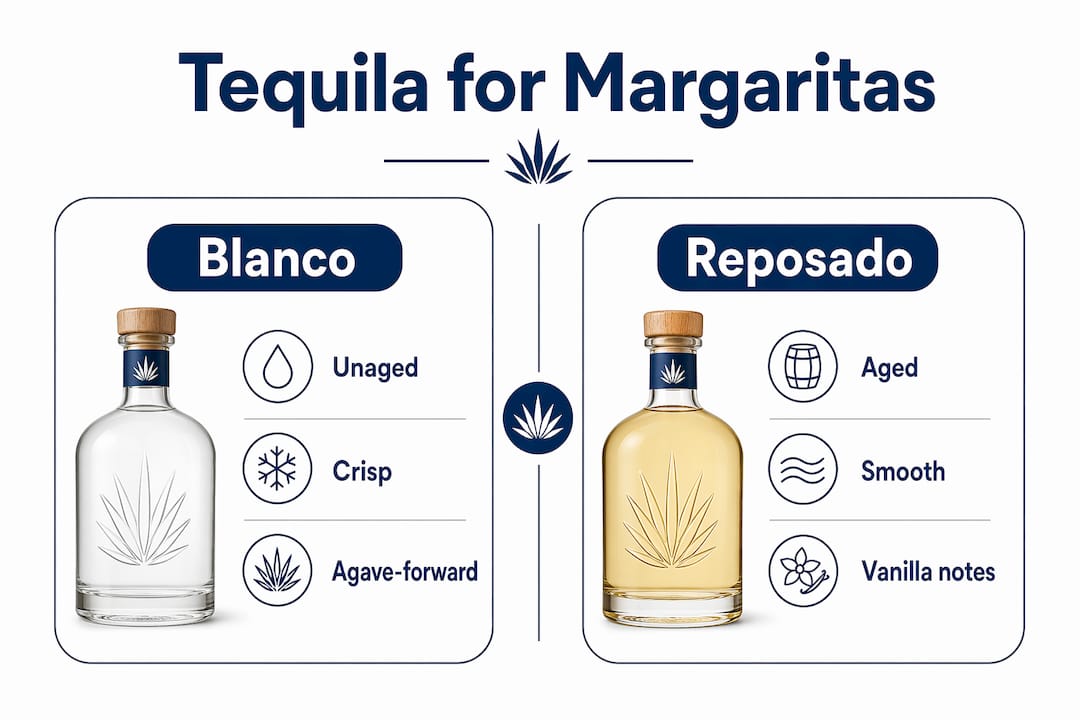
Blanco tequila is unaged. It goes straight from distillation to the bottle, which preserves the raw agave character: green, citrusy, peppery, and clean. That profile is exactly what a classic margarita needs, because the tequila’s brightness amplifies the lime rather than competing with it.
Reposado spends 2–12 months in oak barrels, picking up vanilla, caramel, and a softer mouthfeel. Bartenders increasingly reach for reposado when they want a margarita with more depth, particularly in a Cadillac margarita or a Tommy’s-style build with agave nectar instead of triple sec.
Blanco pros: Crisp, vibrant, agave-forward; ideal for classic and spicy margaritas; typically less expensive. Blanco cons: Can taste sharp or harsh in lower-quality bottles.
Reposado pros: Smoother, more complex; adds natural sweetness without artificial additives; great for frozen or flavored variations. Reposado cons: Oak and vanilla can mute the lime in a standard build; usually costs more.
For a classic or skinny margarita, blanco wins. For a richer, more layered cocktail, reposado is worth trying.
Why additive-free 100% Blue Agave tequila makes a better margarita
Whiteout Tequila’s blanco is crafted from hand-selected 100% Blue Weber Agave using traditional small-batch methods, including slow cooking that preserves the plant’s natural sugars. The result is a spirit with no artificial additives, no glycerin, and no flavor shortcuts. It has earned a gold medal at Agavos and a silver medal at the San Francisco World Spirits Competition, two of the most respected blind-tasting evaluations in the industry.
Award-winning purity: Whiteout Tequila Blanco holds a gold medal from Agavos and a silver medal from the SFWSC, both earned in blind competition.
Those awards matter in the context of margarita making because they confirm what the label claims: the spirit is clean, balanced, and built on genuine agave character. When you mix it with fresh lime and Cointreau, nothing artificial gets in the way. You can read more about what those competition wins mean for the bottle’s quality and consistency.
How does aging level affect margarita flavor?
Blanco is the standard for a reason. Its unaged profile keeps the cocktail bright and citrus-forward, which is the canonical Tex-Mex margarita character. Reposado softens that edge and adds caramel and spice, producing a margarita that feels rounder and more warming. Añejo, aged 1–3 years, tips into bourbon-adjacent territory; it can work in a refined, spirit-forward cocktail, but it tends to overpower lime and sweetener in a standard build. Extra añejo is best saved for sipping neat. The practical rule: the older the tequila, the less it belongs in a shaken cocktail with citrus.
How do regional differences in tequila production affect your margarita?
Tequila can only be produced in five Mexican states, with the Jalisco highlands (Los Altos) and the lowland valley around Tequila town producing noticeably different spirits. Highland agaves tend to grow larger and sweeter, producing tequilas with more floral and fruity notes, which translate to a brighter, slightly sweeter margarita. Lowland agaves yield earthier, more herbaceous spirits with a stronger pepper finish. Siete Leguas and El Tesoro both come from traditional Jalisco production, which is part of why they carry that clean, complex character bartenders favor. When you are shopping, checking the distillery’s region on the bottle or the tequila types guide gives you a real preview of what the cocktail will taste like.
What bottle size should you buy for making margaritas?
A standard 750ml bottle yields roughly 16–17 margaritas at 1.5 oz of tequila per drink, which covers a small gathering comfortably. For a party or a pitcher margarita recipe, a 1-liter bottle stretches further and often costs less per ounce. The 1.75-liter handle is the right call for large events, and budget-friendly bottles like Cimarron are specifically worth buying in that size because the quality-to-cost ratio stays strong at volume. For a single bottle you plan to sip and mix from over time, the 750ml is the practical default.
How to spot authentic tequila and avoid counterfeits
Every legitimate tequila bottle carries a NOM number, a four-digit code assigned by Mexico’s regulatory body (the CRT) to the specific distillery. You can verify any NOM at the CRT’s official registry. Bottles without a NOM, or with a NOM that does not match the stated distillery, are a red flag. Beyond the NOM, look for “100% de agave” or “100% Blue Weber Agave” on the label; if it just says “tequila” without that qualifier, it is a mixto. Buying from licensed US retailers and established online spirits shops reduces the risk considerably. The Mexican food and beverage trends driving agave spirit demand in 2026 have also increased the number of premium bottles available through verified US channels, making it easier than ever to buy the real thing.
Which tequila works best for each margarita style?
Different builds call for different bottles.
Classic margarita: Blanco tequila, Cointreau, fresh lime juice. LALO or Espolon Blanco keeps the cocktail clean and citrus-forward. The 3-2-1 ratio (1.5 oz tequila, 1 oz Cointreau, 0.5 oz lime) is the standard build.
Frozen margarita: Reposado works well here because blending dilutes the spirit’s brightness. Cimarron Reposado or Don Julio Reposado adds caramel depth that survives the ice.
Spicy margarita: Blanco with strong pepper notes, like El Tesoro, amplifies the heat from jalapeño or serrano without adding competing sweetness. A craft cocktail syrup made with chili can sharpen the spice further.
Skinny margarita: Blanco tequila, fresh lime, and agave nectar instead of triple sec. LALO’s clean profile shines in this low-sugar build because there is no sweetener masking the spirit.
Flavored margarita (mango, watermelon, etc.): Espolon Blanco’s fruity, balanced character pairs naturally with fruit purees without clashing. Avoid reposado here; the oak competes with delicate fruit flavors.
Whiteout Tequila: premium additive-free blanco for home mixing
If the bars above have you thinking about what to stock at home, Whiteout Tequila offers a direct path to the same quality without a bar tab.
Whiteout Tequila Blanco is 100% Blue Weber Agave, additive-free, small-batch crafted, and award-winning. It is built for exactly the kind of mixing this article covers: classic margaritas, spicy builds, skinny cocktails, and everything in between. You get the clean agave character that experts say a margarita needs, shipped directly to your door. Pick up a bottle of Whiteout Tequila Blanco and mix your first batch with confidence, knowing the spirit in your glass earned its medals the honest way.
FAQ
What brand of tequila makes the best margaritas?
LALO Blanco is the top expert pick for classic margaritas, praised for its clean, citrus-forward profile and certified additive-free status. Espolon Blanco and Cimarron Blanco are the best value options for everyday mixing and pitcher margaritas.
Are margaritas better with blanco or reposado?
Blanco is the standard choice for a crisp, citrus-forward margarita. Reposado adds vanilla and caramel depth, making it a better fit for frozen or Cadillac-style builds where a richer flavor is the goal.
What tequila do Mexican restaurants use for margaritas?
Most Mexican restaurants use 100% agave blanco tequilas like Espolon, Don Julio Blanco, or Herradura Silver, which balance quality and cost at bar volume. Venues like Mayamezcal and Vida Verde go further, building their programs around premium and additive-free agave spirits.
Is gold tequila good for margaritas?
Gold tequila at entry-level prices is usually a mixto with only 51% agave and added caramel coloring. It produces a harsh, unbalanced cocktail. Stick with a labeled 100% agave blanco or reposado for any margarita worth drinking.
Does Whiteout Tequila work well in margaritas?
Yes. Whiteout Tequila Blanco is additive-free, 100% Blue Weber Agave, and gold-medal awarded, which means it meets every criterion experts cite for a quality margarita tequila: purity, clean agave flavor, and no artificial additives to muddy the cocktail.
Key Takeaways
Blanco tequila labeled 100% Blue Agave and certified additive-free is the single most reliable foundation for a great margarita, whether you are mixing one glass or a full pitcher.
| Point | Details |
|---|---|
| Choose 100% agave blanco | Additive-free blanco delivers the clean citrus and spice notes a margarita needs. |
| Best value picks | Espolon Blanco (~$25) and Cimarron Blanco (~$25) are the top choices for pitcher margaritas. |
| Reposado for complexity | Aged 2–12 months in oak, reposado adds vanilla and caramel depth for frozen or Cadillac builds. |
| Avoid mixtos | Gold or Joven tequilas at low prices are often only 51% agave and taste harsh in cocktails. |
| Whiteout Tequila Blanco | Award-winning, additive-free 100% Blue Weber Agave blanco built for mixing and sipping. |
Editor's Pick — Gold Medal Winner
Whiteout Blanco Tequila
100% Blue Weber Agave · Additive-Free · Gold Medal, Agavos · Silver Medal, SFWSC
Shop Whiteout Blanco →Looking to elevate the experience? Pair with the Celebration Duo or VIP Bar Pack.
