


The Tequila Negroni is equal parts tequila, Campari, and sweet vermouth, stirred over ice and strained into a rocks glass over a single large cube. That’s the whole recipe. Everything else is refinement.
Single-serve recipe:
- Add equal parts tequila, Campari, and sweet vermouth to a mixing glass filled with large ice cubes.
- Stir until the outside of the glass feels cold, which usually takes some time.
- Strain into a rocks glass over one large ice cube or sphere.
- Express an orange peel over the glass, run it around the rim, and drop it in.
The equal-parts 1:1:1 ratio is the structural anchor of this drink. Shift any one component and you’re already moving toward a different cocktail. The tasting note: bitter-orange up front, agave earthiness through the middle, and a clean, slightly sweet finish that lingers.
What goes into a tequila negroni recipe?
Campari is non-negotiable. Its bitter-orange backbone is what defines the Negroni family, and no other aperitivo replicates it exactly. The bitterness is assertive but not harsh when the drink is properly diluted and balanced.
Sweet vermouth does more work than most people realize. A thin, generic vermouth flattens the cocktail. A quality one, like Carpano Antica Formula, adds vanilla, dried fruit, and herbal depth that bridges tequila’s agave notes and Campari’s bitterness. Store your open bottle in the refrigerator and use it within four to six weeks. Oxidized vermouth is the single most common reason a Negroni tastes off.
Tequila replaces gin structurally, but the flavor shift is more than cosmetic. Gin brings botanicals; tequila brings earth, pepper, and raw agave. The result is a modern, more grounded version of the classic that suits people who find gin Negronis too floral. Optional add-ins like a few dashes of orange bitters or a small measure of blood-orange shrub can add complexity without disrupting the base, though the three-ingredient version stands on its own.
How to stir, dilute, and serve it right
Technique separates a good Tequila Negroni from a great one. The method is simple, but each step has a reason.
- Stir for 20–30 seconds using a bar spoon in smooth, continuous circles. This is the window the Distillery App technique targets for proper chill and dilution without clouding the drink.
You stir rather than shake because this cocktail is all spirits. Shaking introduces air bubbles and ice chips that cloud the drink and alter its texture. A stirred Negroni is silky; a shaken one is frothy and dilutes unevenly.
Pro Tip: Judge dilution by feel. When the outside of the mixing glass is uniformly cold and slightly slippery with condensation, you’re close. If it still feels dry and room-temperature in spots, keep stirring.
Which tequila works best in this drink?
Ingredient quality is critical here because the cocktail is almost entirely spirits. There’s nowhere for a mediocre bottle to hide. Stick to additive-free, 100% Blue Agave tequila. The style you choose changes the character of the finished drink considerably.
For a deeper look at how blanco, reposado, and añejo differ in flavor, the tequila types and flavor profiles guide covers the full breakdown.
| Tequila style | Flavor effect in the cocktail | Price/quality guidance | Best garnish pairing |
|---|---|---|---|
| Blanco | Bright, herbaceous, raw agave lift | $25; great value for mixing | Lime peel or grapefruit twist |
| Reposado | Vanilla, honey, mild spice; harmonizes with Campari | $35; often the sweet spot | Orange twist |
| Cristalino/Añejo | Smooth, oaky, rounded; can mute bitterness | $50; use carefully | Orange twist or rosemary |
| Whiteout Tequila Blanco | Clean agave, peppery finish, no additives to muddy Campari | Award-winning; ships across the U.S. | Grapefruit or orange twist |

Reposado is the most forgiving choice. Its mild barrel influence adds vanilla and honey that harmonize naturally with Campari’s bitter-orange profile, and it keeps the agave audible without fighting the vermouth. Blanco works beautifully if you want a brighter, more assertive drink. Cristalino and añejo are worth trying, but their oak can soften the bitterness to the point where the cocktail loses its edge.
Whiteout Tequila’s Blanco is additive-free and 100% Blue Weber Agave, which means nothing interferes with how it reads against Campari. The clean, peppery agave character holds its own in the mix.
How to batch a tequila negroni for a crowd
The equal-parts formula scales perfectly. Keep the 1:1:1 ratio, multiply by the number of servings, and account for dilution separately rather than stirring each batch to order.
| Servings | Tequila | Campari | Sweet vermouth | Pre-dilution water |
|---|---|---|---|---|
| 4 | 4 oz | 4 oz | 4 oz | 1 oz |
| 8 | 8 oz | 8 oz | 8 oz | 2 oz |
| 12 | 12 oz | 12 oz | 12 oz | 3 oz |
Add roughly 25% of the total volume as chilled, filtered water to approximate the dilution you’d get from stirring.
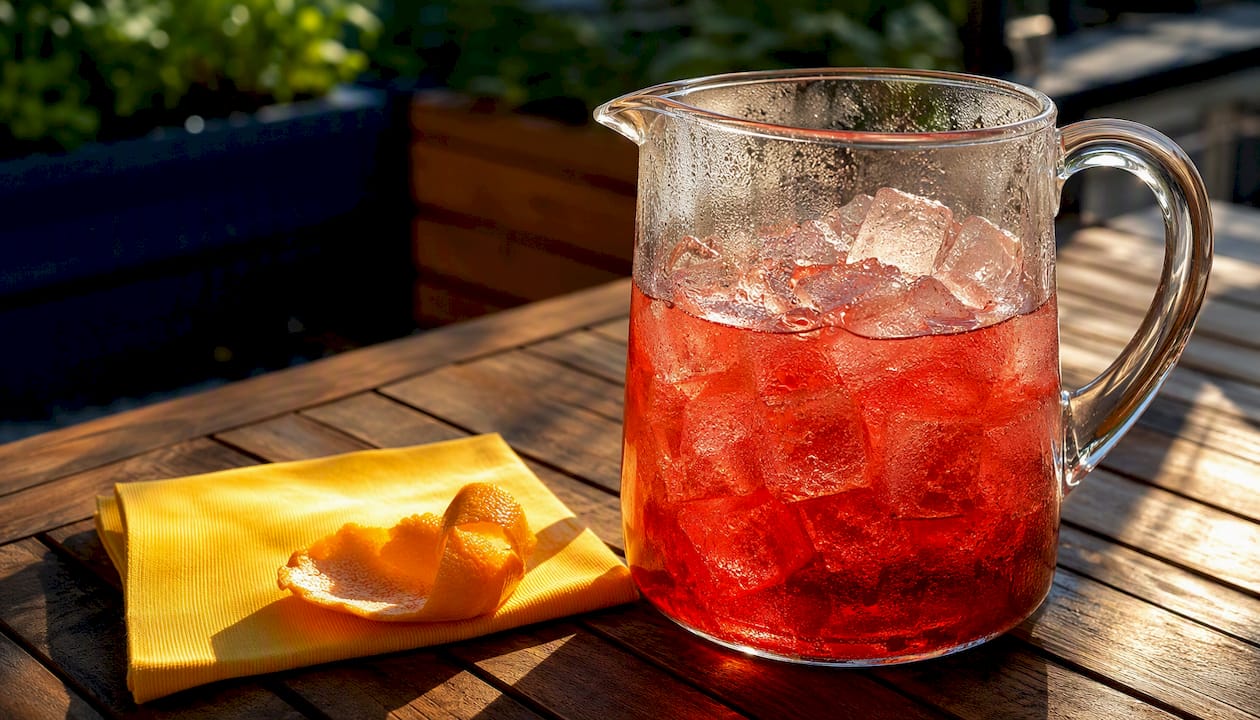
Add roughly 25% of the total volume as chilled, filtered water to approximate the dilution you’d get from stirring. Combine everything in a pitcher or bottle, seal it, and refrigerate. The batch keeps well for up to two days. Because vermouth is the most perishable component, don’t push it past 48 hours.
At service, pour each portion over a large ice cube in a rocks glass and express a fresh orange peel to order. The garnish is the one thing you can’t pre-batch.
Variations worth trying
The Tequila Negroni has a small family of close relatives. Each one changes just one or two variables, but the flavor shift is noticeable.
- Rosita: Splits the vermouth between sweet and dry (typically ½ oz each). Rosita historically uses both vermouths, which produces a drier, more nuanced finish than a straight Tequila Negroni. Some recipes also add a dash of Angostura bitters. This is where the naming confusion comes from; the two cocktails are related but not the same.
- Agavoni: Swaps Campari for a lighter amaro like Aperol or a mezcal-friendly bitter liqueur. The result is sweeter and less assertive. Good entry point for guests who find Campari too intense.
- Spicy Negroni: Muddle two thin jalapeño slices in the mixing glass before adding ice and spirits. Strain out the solids. The heat integrates into the drink rather than sitting on top.
- Blood-orange riff: VinePair suggests adding a small measure of blood-orange shrub to the base recipe for a fruity, acidic layer that keeps the core formula intact. About ¼ oz is enough.
The equal-parts starting point is what separates a Tequila Negroni from a Boulevardier-style riff. Once you start shifting ratios significantly, you’re in different cocktail territory.
How to fix common problems
Too bitter: Add a small splash of simple syrup (¼ oz) or increase the sweet vermouth by ¼ oz. Don’t reach for more tequila first; it won’t reduce bitterness, it’ll just raise the alcohol.
Too sweet: A few drops of orange bitters sharpen the finish. Alternatively, swap a portion of the sweet vermouth for dry vermouth, which moves you toward Rosita territory.
Over-diluted: You can’t un-dilute a drink, but you can prevent it. If you’re batching, keep the bottle cold and serve immediately over ice rather than letting it sit in a pitcher at room temperature.
Aperol swap: Aperol is sweeter and lower in bitterness than Campari. When substituting, reduce Aperol slightly (¾ oz) and keep the other components at 1 oz each. The drink becomes softer and more approachable.
Low-ABV version: Replace the tequila with a non-alcoholic agave spirit and use a non-alcoholic aperitivo in place of Campari. The flavor won’t be identical, but the structure holds.
Why Whiteout Tequila belongs in this recipe
Whiteout Tequila is built around one principle: nothing added, nothing hidden. The Blanco is made from 100% Blue Weber Agave, hand-selected and slow-cooked using traditional small-batch methods in Mexico. No additives, no flavor enhancers, no shortcuts. That matters in a Negroni because, as the Food Republic piece on tequila swaps notes, the cocktail is almost entirely spirits. Every ingredient is exposed.
The Whiteout Blanco brings clean agave, a peppery mid-palate, and a finish that doesn’t compete with Campari’s bitterness. It holds its own without overwhelming the vermouth. The Gold Medal recognition the bottle has earned reflects what you taste: a spirit that’s been made with enough care to stand up in a glass of its own, and precise enough to anchor a cocktail. For this recipe, the Blanco is the recommended starting point. If you prefer a rounder, slightly warmer profile, the same additive-free philosophy applies across the range.
For more tequila-forward cocktail ideas, the best tequila cocktails guide covers twelve classics worth making.
Key Takeaways
A well-made Tequila Negroni comes down to equal parts, quality ingredients, and 20–30 seconds of patient stirring.
| Point | Details |
|---|---|
| Equal-parts ratio | Use 1 oz each of tequila, Campari, and sweet vermouth as your starting point every time. |
| Stir, don’t shake | Stir 20–30 seconds with large ice for proper dilution and a silky, clear texture. |
| Reposado for balance | Mild barrel-aging adds vanilla and honey that harmonize with Campari’s bitter-orange profile. |
| Express the garnish | An orange twist releases aromatic oils that shape the drink’s aroma before the first sip. |
| Whiteout Tequila Blanco | Additive-free, 100% Blue Weber Agave; clean agave and pepper that hold up against Campari. |
The case for making this your house cocktail
There’s a version of cocktail culture that treats complexity as the goal. More ingredients, more steps, more obscure bottles. The Tequila Negroni pushes back on that. Three bottles, a mixing glass, and two minutes. The result is a drink that rewards quality ingredients more than technique, which means the ceiling rises with every better bottle you open.
What most people underestimate is how much the tequila style shifts the experience. A blanco Negroni and a reposado Negroni are genuinely different drinks. The blanco version is sharper, more vegetal, almost confrontational in the best way. The reposado version is warmer, rounder, easier to hand to someone who’s skeptical. Neither is wrong. That range is exactly why this riff has staying power beyond novelty.
Serve it when you want something that feels considered without being fussy. It’s the right drink for a slow Sunday evening, a dinner party aperitif, or any moment that calls for something bitter, cold, and worth paying attention to.
Whiteout Tequila: the bottle this recipe was built for
The Tequila Negroni rewards the best bottle you’re willing to open. Whiteout Tequila’s Blanco is additive-free, 100% Blue Weber Agave, and has earned Gold Medal recognition for the quality you taste immediately. It ships across the U.S. and is the tequila this recipe was designed around.
Pick up a bottle of Whiteout Tequila Blanco and pair it with a set of branded rocks glasses built for exactly this serve. Both are available now at whiteouttequila.com. Add them to your cart and you’ll have everything you need to make this cocktail tonight.
FAQ
What is a Negroni with tequila called?
A Tequila Negroni is sometimes called a Tegroni. When the recipe includes both sweet and dry vermouth, it’s more accurately called a Rosita, which produces a drier, more complex finish.
Can you make a Negroni with tequila instead of gin?
Yes. Tequila substitutes directly for gin at the same 1 oz measure, keeping the equal-parts 1:1:1 ratio with Campari and sweet vermouth. The flavor shifts from botanical to earthy and peppery.
Are tequila Negronis good?
They’re excellent, particularly with a reposado or a clean blanco like Whiteout Tequila Blanco. The agave character adds depth that many drinkers prefer to gin’s floral botanicals.
What is a dirty Negroni?
A dirty Negroni adds a small amount of olive brine to the classic formula, introducing a savory, briny note. In a tequila version, start with ¼ oz of brine and adjust to taste.
